The Samarkand Power Shift: Analyzing the Final Rosters for the 2026 Chess Olympiad
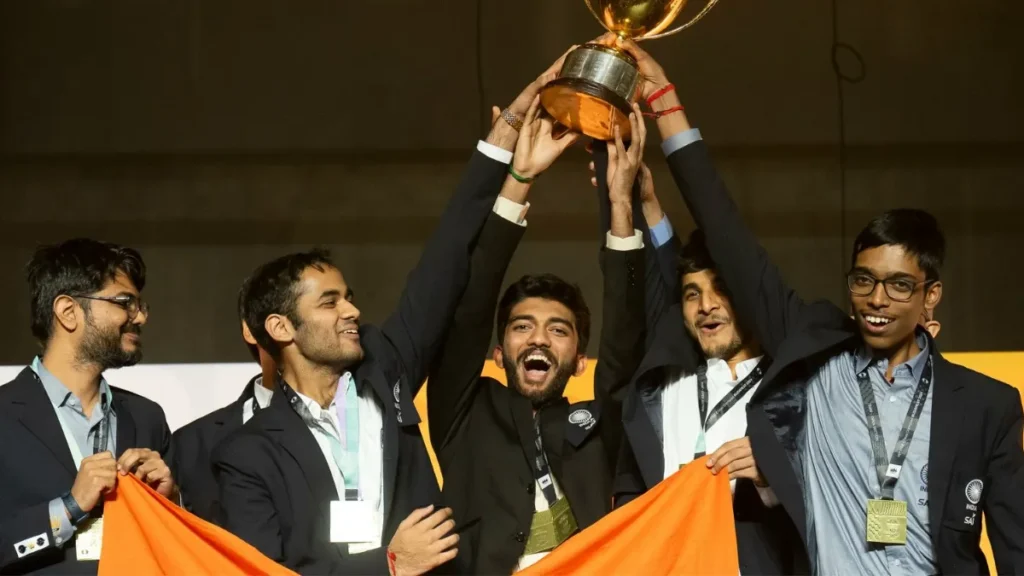
As the chess world pivots from the individual triumphs in Biel and Chennai, all eyes have turned to the ancient city of Samarkand. With the 46th Chess Olympiad set to commence in September 2026, the national federations have officially finalized their rosters as of July 25, 2026. What emerges is a landscape of unprecedented depth, where the traditional hierarchies of the 20th century have been almost entirely replaced by a new, hyper-competitive “Prodigy Meta.”
The Olympiad remains the ultimate test of a nation’s chess culture. It is no longer enough to have a single world-class player at the top; the modern team game requires four “engines” capable of grinding out wins in the most sterile of theoretical draws. This year, the focus is squarely on three major factions: the defending champions from India, the home-turf titans of Uzbekistan, and the veteran-led squad from the United States. Each team represents a different philosophy of the game, and their clashes will define the next decade of professional chess.
1. The Indian “Dream Team”: Defending the Gold
India enters Samarkand not just as the defending champions, but as the most statistically dominant force the event has seen since the peak of the Soviet era. The roster, confirmed this morning, is a “who’s who” of the world’s top 10. Led by Arjun Erigaisi—who has recently solidified his position as World No. 4—the team boasts a lineup that has no discernible weak link.
Joining Arjun are the reigning World Champion Gukesh D, R Praggnanandhaa, and Nihal Sarin, with Vidit Gujrathi providing the veteran stability as the fifth player. The selection of Nihal Sarin over other high-rated Indian GMs has sparked significant debate among enthusiasts. Nihal’s inclusion is a tactical choice: his “unbeatable” reputation in high-pressure defensive situations makes him the perfect “Board 4” anchor, allowing the explosive talents of Gukesh and Arjun to take maximum risks on the top boards.
The Gukesh Factor: Despite a difficult run at the Chennai Grand Masters earlier this month, the Indian selectors have shown absolute faith in the World Champion. For Gukesh, Samarkand is the ultimate opportunity to regain his momentum before his title defense in November. The narrative within the team is one of “collective resilience”—a psychological safety net designed to absorb the individual fluctuations of their young stars.
2. Uzbekistan: The Home Turf Advantage
If India is the favorite, Uzbekistan is the “Emotional Favorite.” Playing in Samarkand, the Uzbek squad carries the weight of a nation that has seen a total chess revolution over the last four years. Led by the tactical wizardry of Nodirbek Abdusattorov, the Uzbeks have built a team that thrives on chaos and aggressive time-scrambles.
The Uzbek strategy remains consistent with their 2022 gold-medal-winning form: high-energy, uncompromising chess. Javokhir Sindarov, the 2026 Candidates winner, will be playing on Board 2, creating a “One-Two Punch” that is arguably more dangerous than any other pair in the tournament. The home-field advantage in Samarkand cannot be overstated; the local support and familiar conditions are expected to give the Uzbeks a “half-point advantage” in psychological stamina during the grueling 11-round Swiss format.
3. The American Dilemma: Experience vs. The Youth Surge
The United States enters the 2026 Olympiad at a crossroads. For over a decade, the US team was defined by the “Big Three” of Fabiano Caruana, Hikaru Nakamura, and Wesley So. While Caruana and So remain the bedrock of the team, the professional landscape has changed. Nakamura’s selective tournament schedule has led to Levon Aronian taking the lead on the veteran front, fresh off his dominant win in Biel.
The “American Dilemma” is how to integrate their emerging youth with their established legends. The inclusion of Hans Niemann on the provisional list has been the subject of intense scrutiny. Niemann’s 2026 form has been erratic but occasionally brilliant, making him a “wild card” that could either secure a podium finish for the US or lead to internal friction. The US squad’s success depends on whether they can match the raw energy of the Asian teams with their superior experience in endgame technique.
4. Technical Trends: The “Board 4” Specialist
A fascinating trend observed in the 2026 roster announcements is the rise of the “Board 4 Specialist.” In previous decades, the bottom boards were reserved for the weakest players of a strong squad. In Samarkand, we are seeing a shift where teams are placing “Draw Specialists” or “Endgame Grinders” on Board 4 to act as a defensive wall.
- The Strategy: By ensuring a draw on Board 4, a team can allow its top boards to play high-variance openings (like the King’s Indian or the sharpest lines of the Najdorf) without the fear of a team loss.
- The Candidates: Nihal Sarin (India), Vladimir Fedoseev (Slovenia), and Yu Yangyi (China) are all archetypes of this new role. Their primary objective is to remain unbeaten, creating a psychological foundation for their more aggressive teammates.
5. The Dark Horses: China and Norway
No analysis of the 2026 Olympiad is complete without mentioning China and Norway. While China has been less active on the individual circuit, their Olympiad preparation is notoriously secretive and intensive. Led by Ding Liren and Wei Yi, the Chinese team remains the most disciplined unit in the field. They play a “hive-mind” style of chess where individual glory is secondary to the team result.
Norway, led by Magnus Carlsen, remains the ultimate “Spoiler.” While Norway lacks the depth of India or the US, Carlsen on Board 1 is an automatic pressure point for every other team. In the 2026 meta, where engine preparation has leveled the playing field, Carlsen’s ability to “grind water from a stone” remains the most effective weapon in the sport. If the Norwegian middle boards can hold their own, Carlsen is capable of dragging his team to a podium finish through sheer force of will.
Conclusion: A Battle for the Future of the Game
The 2026 Chess Olympiad is more than just a tournament; it is a declaration of which nation has best mastered the “Engine-Human Hybrid” era of chess. As of July 25, the rosters are set, the training camps are in session, and the political intrigue of FIDE has provided a dramatic backdrop to the competitive preparation.
For enthusiasts, the Samarkand Olympiad offers a rare look at “Total Chess.” There are no easy draws, no safe rounds, and no room for error. Whether India can maintain its dynasty, Uzbekistan can reclaim its throne, or the United States can prove that experience still trumps youth, the games in Samarkand will be the ultimate barometer for the state of the game in 2026.
This report is part of our ongoing coverage leading up to the 46th Chess Olympiad. Stay tuned for our deep-dive analysis into the specific opening preparations of the top-seeded teams next week.

Prochess.Online
prochess.online is built and maintained independently, focused on free, privacy-first chess tools powered by Stockfish 18.